

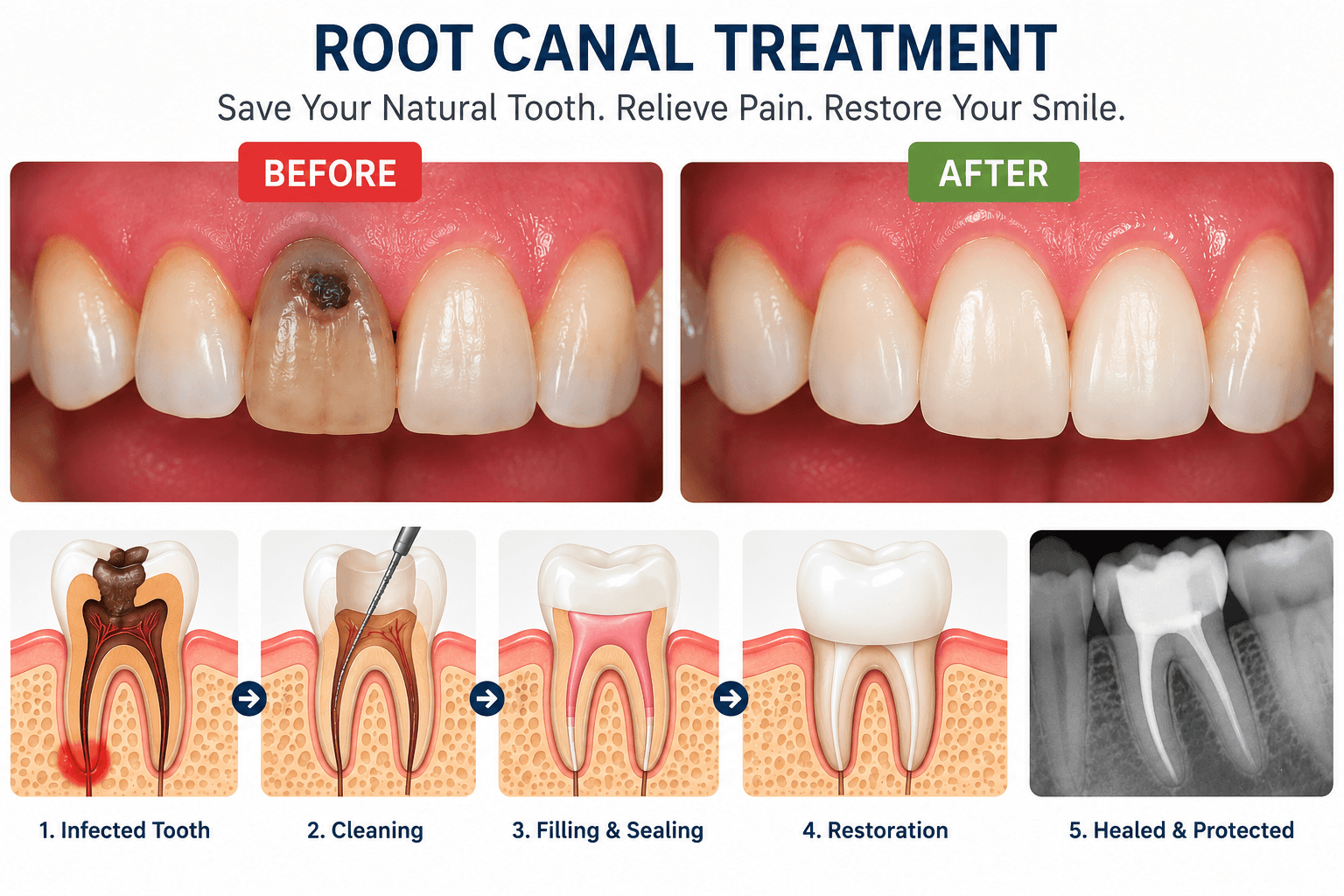
What is Root Canal Treatment?
Root Canal Treatment (RCT) is a dental procedure used to save a tooth that has become infected or severely damaged. Instead of removing the tooth, the infected pulp (soft tissue inside the tooth) is removed, the inside of the tooth is cleaned and disinfected, and then it is sealed to prevent further infection.
Modern root canal treatment is a safe, effective, and virtually painless procedure that helps preserve your natural tooth and restore oral health.
Overview of Root Canal Treatment
A root canal becomes necessary when the pulp inside a tooth becomes inflamed or infected due to:
If left untreated, the infection can spread, causing severe pain, abscess formation, and even tooth loss.
Symptoms: When Do You Need a Root Canal?
You may need Root Canal Treatment if you experience any of the following symptoms:
Persistent Tooth Pain
Continuous pain while chewing, biting, or even at rest may indicate an infected tooth pulp.
Sensitivity to Hot or Cold
If your tooth remains sensitive to hot or cold foods and drinks long after the stimulus is removed, it could be a sign of nerve damage.
Swollen or Tender Gums
Swelling, tenderness, or a small pimple-like bump on the gums near the affected tooth may indicate an infection.
Tooth Discoloration
A tooth that becomes dark or grayish may have damaged or infected pulp.
Pain While Eating
Discomfort or sharp pain when biting down can indicate an infection deep inside the tooth.
Loose Tooth
An infected tooth may become loose due to bone loss around the root.
Dental Abscess
Pus formation, bad breath, or a bad taste in the mouth can be signs of an advanced tooth infection requiring immediate treatment.
Root Canal Treatment Procedure: Step-by-Step
-
Step 1: Dental Examination and X-Ray The dentist examines the affected tooth and takes X-rays to assess the extent of infection and determine the condition of the root canals.
-
Step 2: Local Anesthesia A local anesthetic is administered to numb the area around the tooth, ensuring a comfortable and pain-free procedure.
-
Step 3: Accessing the Tooth A small opening is created on the top surface of the tooth to access the infected pulp chamber.
-
Step 4: Removing the Infected Pulp The infected or damaged pulp tissue is carefully removed from the tooth and root canals using specialized dental instruments.
-
Step 5: Cleaning and Disinfecting the Canals The root canals are thoroughly cleaned, shaped, and disinfected to eliminate bacteria and prevent reinfection.
-
Step 6: Filling the Root Canals The cleaned canals are filled with a biocompatible material called gutta-percha to seal them securely.
-
Step 7: Temporary or Permanent Filling The access opening is sealed with a filling material. In some cases, a temporary filling may be placed until the final restoration is completed.
-
Step 8: Dental Crown Placement A dental crown is often recommended to protect and strengthen the treated tooth, especially for back teeth that experience heavy chewing forces.
Benefits of Root Canal Treatment
Saves Your Natural Tooth
Root canal treatment allows you to keep your natural tooth instead of having it extracted.
Relieves Tooth Pain
The procedure removes the source of infection and eliminates pain caused by inflamed nerves.
Prevents Infection Spread
Treating the infection early helps prevent it from spreading to nearby teeth, gums, and jawbone.
Restores Normal Chewing Function
Once restored with a filling or crown, the tooth functions like a natural tooth.
Improves Oral Health
Maintaining your natural teeth helps preserve jawbone health and proper tooth alignment.
Cost-Effective Long-Term Solution
Saving a natural tooth is often more affordable and beneficial than replacing a missing tooth with implants or bridges.
Recovery After Root Canal Treatment
What to Expect
- Mild discomfort or sensitivity for a few days is normal.
- Most patients can return to their daily activities immediately after treatment.
- Pain usually subsides within a few days and can be managed with prescribed medications.
Recovery Tips
- Avoid hard or sticky foods on the treated tooth until the permanent restoration is completed.
- Brush twice daily, floss regularly, and use an antibacterial mouthwash if recommended.
- Attend follow-up appointments for crown placement and routine checkups.
- Take prescribed medications as directed by your dentist.
Is Root Canal Treatment Painful?
Modern root canal treatment is generally no more uncomfortable than getting a routine dental filling. With advanced dental technology and effective anesthesia, most patients experience minimal discomfort during the procedure.
Frequently Asked Questions (FAQs)
How long does a root canal treatment take?
Most root canal procedures can be completed in one or two visits, depending on the complexity of the case.
How successful is root canal treatment?
Root canal treatment has a high success rate and can last for many years with proper care.
Can I eat after a root canal?
Yes, but it is recommended to wait until the numbness wears off and avoid chewing on the treated tooth until fully restored.
Will I need a crown after a root canal?
In many cases, especially for molars and premolars, a dental crown is recommended to protect the tooth from fracture.
What happens if I delay root canal treatment?
Delaying treatment can allow the infection to worsen, leading to severe pain, abscess formation, and potential tooth loss.